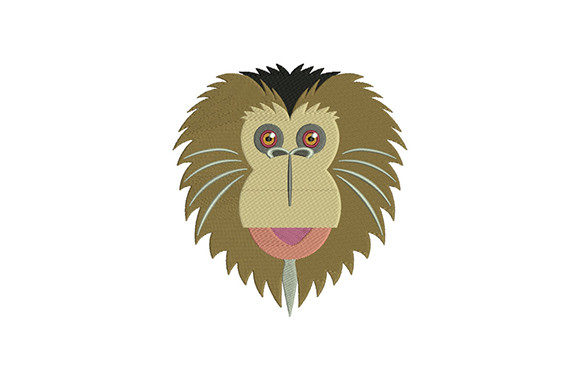
Embroidery Review: Japanese Brown Monkey for Branded Merchandise
A Designer’s First Impression: Character, Cool, and Business Ready
As a professional embroidery designer reviewing the Japanese Brown Monkey for client work, my immediate impression is one of playful character with a grounded, rustic charm. The description hints at a “cool vibe,” which is accurate. This isn’t a overly cartoonish or juvenile animal design; it feels like a stylized, artistic representation that carries a sense of handmade personality. For a small business, this translates to a design that can feel both friendly and professional. It avoids being overly generic, offering a distinctive visual that can help a brand stand out without being intimidating or too decorative. Its place in the Woodland Animals category suggests a natural, earthy aesthetic, perfect for brands with an organic, crafted, or outdoor-inspired identity.
Real-World Business Applications: From Patches to Product Labels
This machine embroidery design holds significant potential for a variety of commercial embroidery projects. The availability of multiple embroidery file formats is crucial for production flexibility across different machines and studios.
For a small café or bakery, the Japanese Brown Monkey could become a charming chest logo on staff aprons or a subtle sleeve detail on uniforms, adding a touch of warmth and approachability. A boutique or handmade shop could use it as a beautifully embroidered patch on tote bags, transforming a simple bag into branded merchandise. For a creative studio, florist, or pet brand, it could serve as a focal point on work shirts or as an accent on product packaging, elevating the perceived value of the finished product.
Consider these specific applications:
- Embroidered Patches: Ideal for creating standalone patches for customer gifts, event merch, or Etsy shop branding. A patch with this design feels like a collectible item.
- Cap Embroidery: A strong candidate for the front of caps, offering a centered, character-driven logo for teams or retail staff.
- Tote Bag Design: A single, well-placed embroidery on a tote bag creates a premium, handmade product feel.
- Apron Embroidery: Perfect for adding brand identity to aprons in food service or craft businesses.
- Product Labels & Accents: Smaller versions could be embroidered directly onto fabric product tags or labels for a truly cohesive branded presentation.
Navigating Technical Considerations for Professional Results
To ensure the Japanese Brown Monkey performs flawlessly in real business use, a designer must approach it with practical testing. Its success hinges on proper execution.
Where to Use With Care
The design's “interesting” character likely comes from details and outlines. This requires attention in certain scenarios:
- Small Patch Sizes: If scaling down dramatically for a tiny product label, test thoroughly. Fine details may need simplification to remain clear.
- Cap Fronts & Curved Surfaces: The curvature of a cap can distort a design. Always create a mockup for client approval on a curved template.
- High Stitch Density Areas: If the design has textured fur or dense areas, it may require specific stabilizer choices to prevent puckering on lightweight fabrics.
- Dark Uniforms or Fabrics: Thread color contrast is paramount. A brown monkey on a dark background might need a light outline or background fill to pop. Always test on real fabric samples.
- Items for Frequent Washing: For uniforms or bags that will be laundered often, a robust stitch structure and quality threads are essential for longevity.
Essential Designer Pre-Production Notes
Before running any commercial embroidery job with this file, follow this checklist:
- Test in Black and White First: Sew out a simple version to check the fundamental structure and outline integrity before committing to final thread colors.
- Verify Small-Scale Performance: Hoop it at the smallest intended size (e.g., for a cap) and review the spacing. Do details merge or become lost?
- Review Thread Color Contrast: Choose palette that aligns with your brand identity and ensures visibility on the target fabric texture.
- Confirm Hoop Size & Stabilizer: Match the design's dimensions to an appropriate hoop and select a stabilizer that complements the fabric—heavy denim for bags versus light cotton for shirts.
- Create a Printable Mockup: This is vital for client approval. Show them how the Japanese Brown Monkey will look on their specific merchandise.
- Compare Beside Other Brand Assets: Does this embroidery design harmonize with your existing logo, fonts, and colors? Visual consistency builds customer trust and recognition.
- Confirm Commercial Licensing: The product description mentions it can be used, but always verify the specific license terms for your business's intended commercial embroidery use before production.
The Impact on Brand Identity and Customer Perception
Using the Japanese Brown Monkey as a branded element goes beyond decoration; it directly shapes your business's story. A well-executed embroidery conveys quality, care, and attention to detail. This design, with its cool, character-driven vibe, can foster a sense of authenticity and engagement. Customers often subconsciously associate intricate, clean embroidery with a premium or handmade product, increasing the perceived value of your merchandise.
For a local business, it builds recognition—a familiar, friendly monkey on a staff apron becomes a symbol of your shop. It enhances professionalism by showing a commitment to cohesive branding across uniforms, caps, and bags. Most importantly, it creates a tangible connection. A tote bag with this unique embroidery isn't just a bag; it's a branded artifact that customers carry, extending your brand's reach and strengthening identity. In the crowded space of small business merch, such a distinctive and well-produced digital embroidery file can be a powerful asset for building loyalty and visual distinction.