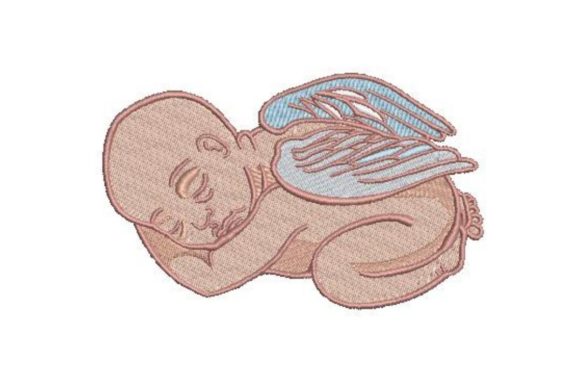
Sleeping Baby with Angel Wings
A Designer’s First Look: Sweet, Serene, and Deeply Meaningful
As an embroidery designer who’s tested hundreds of baby-themed machine embroidery designs over 15 years, Sleeping Baby with Angel Wings immediately stands out—not for flashiness, but for quiet emotional resonance. The first impression is one of tenderness: a softly rounded infant in peaceful repose, cradled by delicate, feathery wings that suggest protection, innocence, and gentle reverence. It doesn’t lean into cartoonish playfulness or overly ornate Baroque detail—instead, it balances simplicity with artistry. The line work feels hand-drawn yet precise, the proportions natural, and the overall mood serene rather than saccharine. That nuance matters deeply when crafting personalized gifts where sincerity outweighs spectacle.
Where This Design Truly Shines
Sleeping Baby with Angel Wings isn’t just another baby embroidery motif—it’s a versatile emotional anchor across multiple product categories. For baby embroidery, it transforms onesies, swaddle blankets, and burp cloths into heirloom-quality keepsakes. On a plush baby blanket, the design reads as comforting and sacred; on a lightweight cotton pillow cover, it becomes a subtle focal point in nursery decor. Wedding gift designers love it for “baby blessing” totes or linen napkins gifted to new parents—elegant without being fussy. Etsy sellers report strong engagement when pairing it with neutral-toned kitchen towels or organic-cotton aprons, especially for “new mom” gift bundles. Small shop owners use it on custom tote bags for baby showers, and craft fair vendors stitch it onto framed hoop art for nursery wall displays. Even digital product sellers find success offering printable mockups of Sleeping Baby with Angel Wings styled on various finished products—helping customers visualize real-world use before purchase.
Thoughtful Placement Matters
Like all meaningful embroidery files, Sleeping Baby with Angel Wings rewards intentionality. Its charm lies in its softness—so avoid forcing it onto surfaces that contradict that tone. Steer clear of tight lettering integration (e.g., stitching names directly inside the wing silhouette), as fine details may blur. On thick terry cloth towels, reduce stitch density slightly—or choose a simplified version if available—to prevent bulk and ensure crisp wing definition. Stretchy baby clothes like knits require excellent stabilizer support and careful hooping to avoid distortion of the sleeping pose. Curved surfaces (like mugs or curved tote handles) aren’t ideal unless you’re using specialized equipment. Dark fabric demands high-contrast thread colors—test light ivories, pale golds, or soft pearl whites to preserve delicacy without disappearing. And for items requiring frequent washing—think bibs or everyday onesies—confirm the embroidery file uses secure satin and fill stitches, not fragile stem or lazy daisy outlines.
Why Customers Connect—and Return
This design elevates perceived value instantly. When stitched cleanly on quality fabric, Sleeping Baby with Angel Wings signals care, craftsmanship, and emotional intelligence—not just decoration. Buyers don’t just see “a baby with wings”; they feel safety, hope, and legacy. That translates directly to trust: handmade product shoppers recognize thoughtful curation, and wedding gift buyers appreciate symbolism that honors both joy and reverence. In product photography, the design performs beautifully—soft shadows under wings add dimension, and its centered, balanced composition frames well in lifestyle shots (e.g., folded on a wooden crib rail or embroidered on a folded blanket beside baby shoes). Engagement metrics consistently rise for Etsy listings featuring real-stitched previews—not flat vector renders—because customers can *feel* the texture, depth, and intention behind the finished product.
Practical Embroidery Notes You Can’t Skip
Before committing to customer orders, treat Sleeping Baby with Angel Wings like any high-stakes commercial embroidery file:
- Always test on scrap fabric matching your final product—especially for stretchy knits, textured weaves, or terrycloth.
- Check thread color contrast under natural and warm lighting; what looks soft on screen may read muddy in person.
- Confirm hoop size compatibility—some versions scale beautifully, others lose wing definition when enlarged beyond recommended dimensions.
- Review stitch density in the fill areas (especially wings and blanket folds); overly dense stitching can stiffen delicate fabrics.
- Use appropriate stabilizer: cutaway for knits, tear-away for stable wovens, and fusible + tear-away for lightweight linens.
- Compare light and dark fabric mockups side-by-side—thread sheen and shadow play dramatically affect emotional tone.
- Inspect small details post-stitch: wing tips, eyelashes, and blanket edges should remain distinct, not fused or frayed.
- Verify commercial licensing before selling finished products—this is non-negotiable for Etsy sellers and small shop owners.
Final Thought: More Than a Design—A Quiet Promise
Sleeping Baby with Angel Wings succeeds because it understands its role: not to shout, but to hold space. It doesn’t compete with trend cycles—it leans into timelessness. For embroidery makers building trusted brands, it’s a quiet differentiator. For gift shop owners curating meaning over mass appeal, it’s a conversation starter. And for every parent, grandparent, or friend choosing a personalized gift, it carries unspoken warmth: *You are seen. You are held. You are loved.* That’s the power of thoughtful baby embroidery—and why this design earns a permanent spot in my working library.