Retro Airplane: A Designer's Guide for Craft Fair Success
As an embroidery designer preparing for a weekend craft fair, my first task is to evaluate which designs will truly shine on my booth table. When reviewing the Retro Airplane embroidery file, my immediate impression is one of bold, decorative charm. The “retro” descriptor suggests a style that is both nostalgic and visually striking, promising a design that can catch a customer’s eye from across a bustling market hall. It feels fun and approachable, perfect for adding a premium, handmade accent to everyday items.
Where the Retro Airplane Design Stands Out on the Table
In a real-world booth display filled with embroidered tote bags, aprons, tea towels, and patches, the Retro Airplane has to earn its place. Its success hinges on pairing it with the right product. A large, clear graphic like this needs a canvas that supports its details. For me, tote bags and aprons are immediate contenders. They offer a flat, stable surface perfect for showcasing the design as a focal point. On a natural canvas tote, the Retro Airplane becomes a statement piece, elevating a simple bag into a unique, giftable handmade item.
For smaller accents, consider tea towel embroidery or a fabric pouch. Here, the design might need to be scaled down, which requires careful evaluation. Does it retain its clarity when smaller? The product description calls it “fun and easy to stitch,” which is promising, but for textured towels or curved surfaces like caps, you must test first. A embroidered patch version of the Retro Airplane could be incredibly versatile, appealing to customers looking for a customizable, transportable piece of the transportation theme.
Practical Production for Sellers
Before committing to batch production for your craft fair products, a professional review is essential. The description says it will look perfect on polo shirts, hoodies, or t-shirts, which are excellent starting points. However, as a seller, I think beyond that.
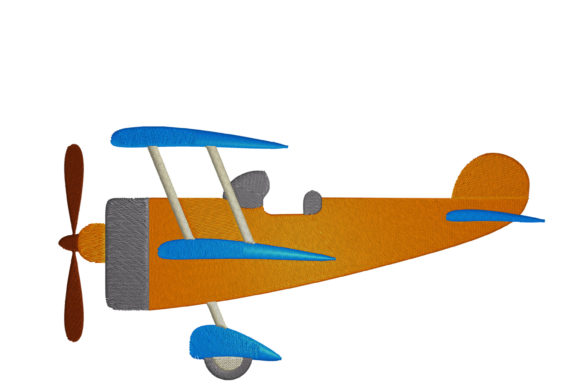
First, consider stitch density. A retro airplane design likely has solid areas (like the plane body) and potentially finer details (like propeller lines). On thick fabric like hoodies or on textured market bags, dense stitch areas can look superb, but they require the correct stabilizer to prevent puckering. Tiny details or any small lettering (if included) might get lost on looped fabrics or when scaled very small for a cap’s curved front.
Thread contrast is another critical point. For online listings like Etsy shops and printable mockups, a design with good contrast photographs well. The Retro Airplane on a dark fabric? You’ll need to plan thread colors carefully—a light or bright thread palette will make it pop and increase perceived value in your Etsy listings and booth samples.
Key Steps Before Your Craft Fair
- Test on Scrap Fabric: Always stitch the machine embroidery design on a scrap of the actual fabric you’ll use—be it canvas, cotton, or twill.
- Check Hoop Size: Confirm the ideal hoop size for your target products. A design meant for a polo shirt might not optimally fit a large tote bag area without adjustments.
- Create a Real Mockup: Don’t rely only on digital mockups. Stitch at least one finished product, like a pillow cover or apron embroidery, to judge its real-world appeal.
- Compare Fabric Colors: See how the design looks on various background colors you offer. This directly affects buyer engagement at your booth.
- Review Commercial Licensing: As a digital seller or small shop product creator, ensure your digital embroidery file license permits commercial use on the finished products you intend to sell.
Selling Power and Booth Display Impact
The Retro Airplane isn't just a file; it’s a product concept. Its visual appeal taps into a transportation theme that can feel universally charming rather than niche. In a booth, items featuring this design create a cohesive, attractive display. A series of products—a tote bag design, a tea towel embroidery, an embroidered patch—all carrying the same graphic strengthens your brand consistency and tells a story.
For customer attention, its success lies in being understandable at a glance. A customer walking past should instantly recognize the fun, retro style. This makes it an excellent candidate for batch production. If it stitches reliably and looks great on several products, you can efficiently create inventory. However, be mindful of designs that may have intricate elements. If the “machine em” part of the description hints at very fine machine embroidery details, they might require slower stitching or specific stabilizers for perfect results on every item.
Ultimately, the Retro Airplane embroidery file offers strong potential for handmade market products. It feels decorative and premium, qualities that enhance product value. By pairing it with the right foundation—like a sturdy tote or a crisp apron—and executing it with professional care regarding thread colors and fabric texture, you can create a lineup of craft fair products that not only sell but also become memorable pieces that buyers cherish. Your final step is to ensure every stitch reflects the handmade quality that creative entrepreneurs and boutique makers are proud to display.